


Fuel quality has a direct impact on the operation of a diesel truck engine. During storage, transportation, or use, diesel fuel can contain water, dust, rust particles, and other contaminants.
A properly selected heavy duty truck fuel filter helps separate or remove unwanted contaminants before fuel reaches the engine's fuel system.
For trucks operating long distances, carrying heavy loads, or working in demanding environments, choosing the appropriate fuel filter is an important part of routine maintenance.
This guide explains the main types of truck fuel filters, how they work, what to check when choosing a replacement, and how to maintain them properly.
The fuel filter is part of the truck's fuel delivery system.
Diesel fuel can contain different types of contaminants, including solid particles and water. If these contaminants reach sensitive fuel system components, they may affect normal fuel system operation.
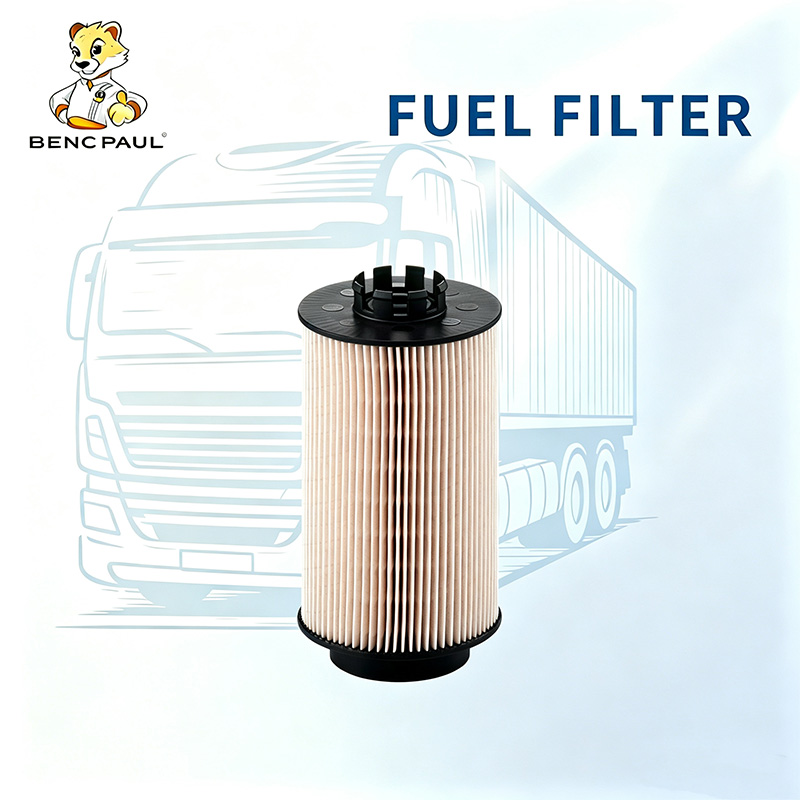
A diesel truck fuel filter is designed to help control these contaminants before the fuel reaches downstream components.
Depending on the filter design, filtration may involve:
Removing solid particles
Separating water from fuel
Protecting fuel system components
Supporting cleaner fuel delivery
Maintaining appropriate fuel flow
The exact function depends on the filter type and the fuel system used by the vehicle.
Diesel engines rely on a controlled fuel delivery system.
Modern fuel systems can operate with relatively precise fuel metering, making fuel cleanliness an important consideration.
Heavy duty trucks can also operate in environments where fuel storage and handling conditions vary considerably.
For example, trucks may be exposed to:
Dusty working environments
Long-distance transportation
Variable fuel storage conditions
Temperature changes
High operating hours
Different fuel supply sources
A suitable heavy duty diesel fuel filter helps provide an additional filtration stage between the fuel supply and the engine.
Truck fuel filters can be designed in different ways depending on the fuel system and application.
Two common categories are spin-on fuel filters and cartridge-type or environmental fuel filters.
A spin-on fuel filter integrates the filter element and housing into a replaceable unit.
During maintenance, the complete filter assembly is normally removed and replaced.
When selecting this type of truck fuel filter, it is important to check:
Thread specification
Overall dimensions
Sealing gasket
Filter configuration
Fuel flow direction
Vehicle and engine application
A similar-looking filter may not necessarily have the correct connection or filtration characteristics.
Cartridge or environmental fuel filters use a replaceable filtration element installed inside a separate housing.
Depending on the vehicle design, the housing may also incorporate additional functions such as water separation or fuel system connections.
When replacing a cartridge-type filter, check:
Element dimensions
Filter media
Sealing rings
Housing compatibility
Application information
Reference number
The replacement procedure should follow the appropriate vehicle or engine maintenance instructions.
Fuel enters the filter and passes through the filtration media.
Solid contaminants are captured by the filter media, while the cleaned fuel continues through the fuel system.
Some fuel filters also incorporate a water-separation function.
This is particularly relevant to diesel fuel because water contamination can create problems within the fuel system.
The exact filtration and separation process depends on the design of the filter.
For this reason, a replacement truck fuel filter should be selected according to the requirements of the specific fuel system rather than simply by external size.
Depending on the filter design and filtration specification, a fuel filter can help control several types of contaminants.
Small particles can enter fuel during handling, transportation, or storage.
Contamination can sometimes originate from fuel storage containers, tanks, or components within the fuel system.
Water can enter diesel fuel through condensation, storage conditions, or other sources.
Fuel filters equipped with water-separation capability can help manage this type of contamination.
The filtration media is designed to capture particles within its specified filtration range.
The actual performance depends on the filter construction and application.
Selecting a fuel filter should begin with the vehicle and engine application rather than the appearance of the filter.
Identify the truck brand and model first.
Different vehicle configurations can use different fuel filtration systems.
The engine model is another important reference when identifying the correct filter.
This can be especially useful when different engines are installed in similar truck models.
If the existing filter is available, check its label for:
Reference number
Dimensions
Application information
Manufacturer information
Other identification marks
A clear product photo can also help when identifying a replacement.
For spin-on filters, thread and gasket specifications are particularly important.
For cartridge filters, the sealing rings and housing dimensions should be checked.
If the vehicle's fuel system requires water separation, the replacement filter should have the appropriate design.
The right fuel filtration solution can vary depending on how the truck is used.
Long-haul trucks can operate for extended periods and cover substantial distances.
Routine fuel filter maintenance helps keep the fuel system in appropriate working condition.
Construction vehicles may work in dusty environments where fuel handling and storage conditions can vary.
Regular inspection and replacement according to the applicable maintenance schedule are important.
Off-road vehicles may face demanding operating conditions and high working hours.
Fuel filtration should be matched to the engine and fuel system requirements.
Agricultural environments can involve dust, soil, and varying fuel storage conditions.
Appropriate fuel filtration can help manage contaminants entering the fuel system.
There is no single replacement interval that applies to every diesel truck.
The recommended service interval can depend on:
Engine design
Vehicle manufacturer's maintenance schedule
Fuel quality
Operating environment
Mileage
Engine operating hours
Fuel system configuration
If a truck frequently operates in demanding conditions or uses fuel from variable storage environments, the fuel filter may require closer monitoring.
The vehicle or engine maintenance instructions should be used as the primary reference.
A fuel filter should normally be replaced according to the appropriate maintenance schedule rather than waiting for a noticeable problem.
However, possible signs of a fuel system issue may include:
Difficulty starting
Reduced engine performance
Irregular engine operation
Fuel flow problems
Water or contamination detected in the fuel system
A significantly overdue filter replacement
These symptoms can have several possible causes.
A fuel filter should not automatically be assumed to be the cause of an engine problem. The complete fuel system should be checked when necessary.
The replacement procedure depends on the filter and vehicle design.
For a typical replacement, important considerations include:
Prepare the correct replacement filter.
Verify the application before removing the existing filter.
Keep the work area clean.
Avoid introducing dirt into the fuel system.
Inspect the sealing components.
Check gaskets and O-rings where applicable.
Install the filter correctly.
Follow the vehicle or engine manufacturer's installation procedure.
Check for leaks after installation.
The fuel system should be inspected after replacement according to the appropriate maintenance procedure.
For fuel systems requiring priming or bleeding, follow the specific procedure for the vehicle.
If you need to identify a replacement fuel filter, providing more information can significantly reduce the possibility of selecting the wrong product.
The most useful information includes:
Truck model + engine model + existing fuel filter number
You can also provide:
Filter dimensions
Thread size
Photos of the existing filter
Fuel system information
Application details
Existing filter label
This information can be used to check whether a particular diesel fuel filter replacement is suitable for the application.
When sourcing truck fuel filters, product compatibility should come first.
A reliable supplier should be able to provide clear information about:
Filter dimensions
Filter construction
Available filter types
Application information
Reference numbers
Packaging
Product consistency
Technical specifications
It is also useful to confirm whether the supplier can support different truck applications and filter configurations.
Clear product information is often more useful than simply comparing the appearance or price of different filters.
Fuel filters can look very similar even when their specifications are different.
For example, two filters may have similar dimensions but use different:
Threads
Gaskets
Filter media
Internal structures
Flow configurations
Water-separation functions
Selecting a filter based only on appearance can therefore create unnecessary compatibility risks.
Before ordering a heavy duty truck fuel filter, always check the relevant application information.
It helps remove contaminants from diesel fuel before the fuel reaches downstream components of the fuel system.
A fuel filter cleans contaminants from fuel, while an oil filter removes contaminants from engine oil. They perform different functions and should not be interchanged.
Some diesel fuel systems use filters with water-separation capability. Whether this is required depends on the vehicle and fuel system design.
The replacement interval depends on the vehicle, engine, fuel quality, operating conditions, and manufacturer's maintenance recommendations.
Some filter specifications can be used across multiple applications, but compatibility should always be verified based on the vehicle and fuel system.
The truck model, engine model, existing filter number, dimensions, photos, and application information can all help identify a suitable replacement.
A properly selected heavy duty truck fuel filter plays an important role in controlling contaminants in the diesel fuel system.
When choosing a replacement, look beyond the appearance of the filter. Check the vehicle application, engine model, filter type, dimensions, connection specifications, sealing structure, and water-separation requirements where applicable.
For truck maintenance and replacement needs, accurate product identification can help ensure that the selected filter is appropriate for the intended application.
BENCPAUL provides filtration products for truck applications, including fuel filters, air filters, oil filters, and air dryer filters.
For product inquiries:
Tel: +86-19563624289
Email: info@bencpaul.com
When contacting BENCPAUL about a heavy duty truck fuel filter, you can provide the existing filter number, truck model, engine information, dimensions, or product photos to help with product identification.

